DAVID COLWELL
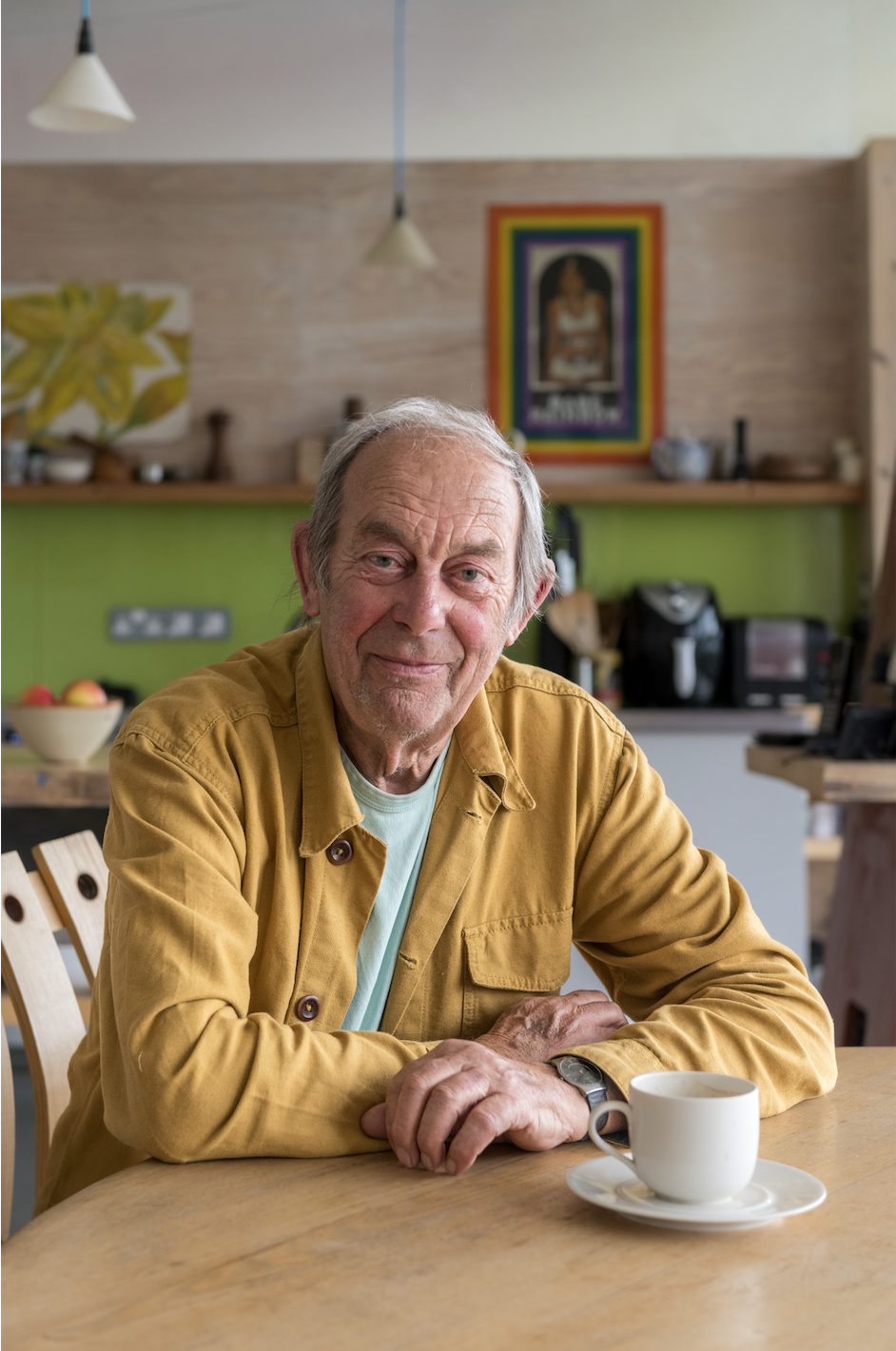
David Colwell is one of the UK’s most respected designers. Trained in Furniture Design at the Royal College of Art, his designs are timeless and his passion is to create furniture that addresses real issues for the future.
David’s furniture has won many awards and appears in permanent and private collections across Europe and America, including London’s V&A Museum and the Vitra Design Museum in Germany.
Before starting Trannon Furniture, David had a successful design practice in Kings Road, London, and was retained by ICI Plastics for product design and J Walter Thompson for interior design and working environments.
STRUCTURE
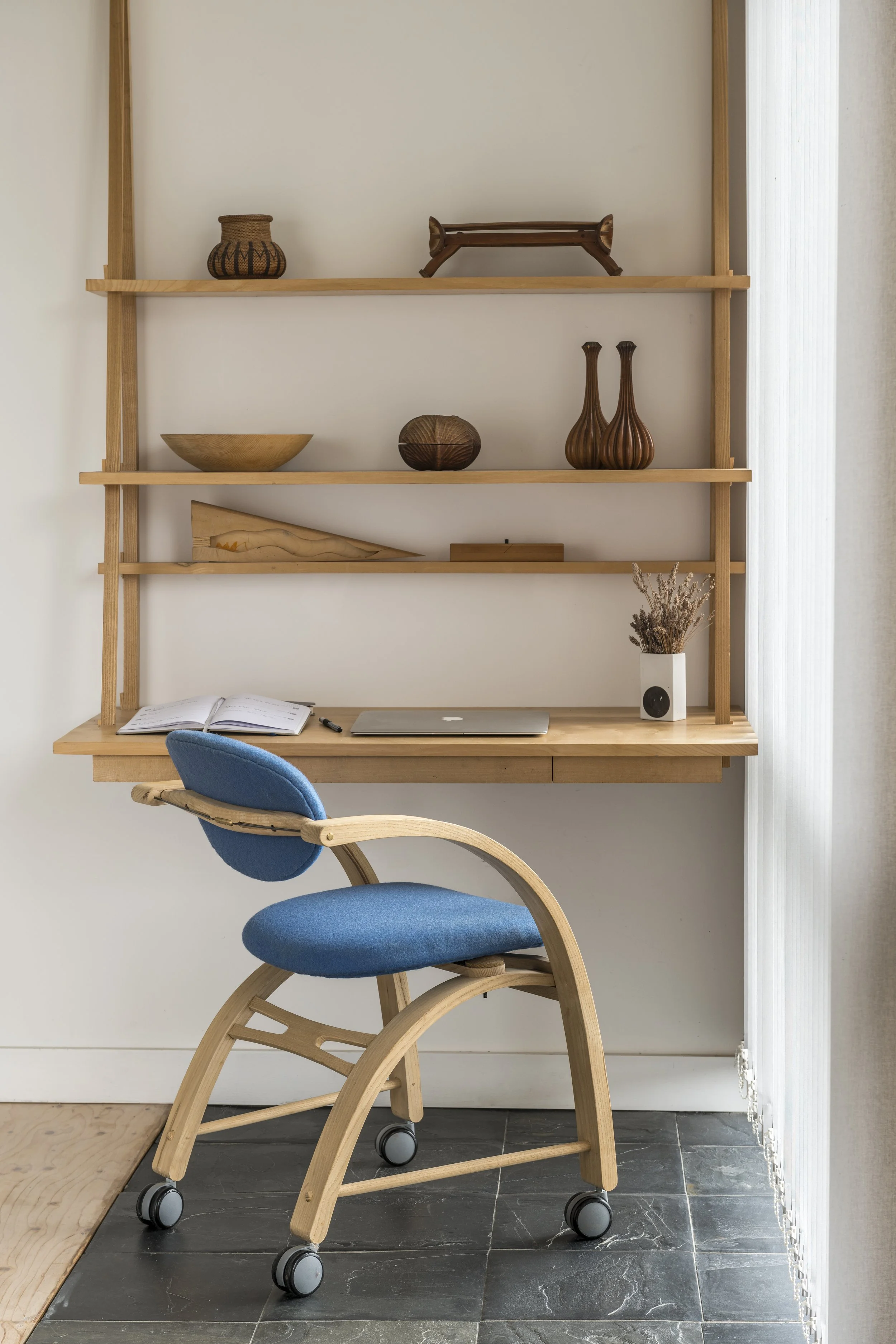
A chair must support a dynamic load many times its own weight. These chairs are designed as fully triangulated structures, where strength comes not from mass, but from geometry.
Triangulation creates efficiency and stability, allowing the joints to work as pivots rather than relying on heavy construction. To balance this inherent rigidity, one or more sides of the triangles are curved, introducing flexibility into the structure.
This controlled flexibility does more than improve comfort. It allows the chair to become stronger, lighter and more responsive in use.
The result is a structure that works with movement rather than resisting it.
PRODUCTION
Steam bending is one of those processes where speed serves the work. Fast rather than slow, it is efficient, enjoyable and never entirely foolproof, making it a particularly valuable use of a craftsman’s time.
The process seasons the timber as it bends, using only a fraction of the energy required in conventional kiln drying. Because the wood is worked green, before seasoning, it can be sourced directly from the forester, who is able to select pieces suited to the task, often from timber that might otherwise have little commercial use.
Steam bending works with the natural properties of wood rather than against them, allowing strength, economy and character to emerge through the making process itself.
PRODUCTION
Steam bending is one of those processes where speed serves the work. Fast rather than slow, it is efficient, enjoyable and never entirely foolproof, making it a particularly valuable use of a craftsman’s time.
The process seasons the timber as it bends, using only a fraction of the energy required in conventional kiln drying. Because the wood is worked green, before seasoning, it can be sourced directly from the forester, who is able to select pieces suited to the task, often from timber that might otherwise have little commercial use.
Steam bending works with the natural properties of wood rather than against them, allowing strength, economy and character to emerge through the making process itself.
COMFORT
Comfort lies at the centre of all my designs. Good posture and comfort are inseparable.
Generous lumbar support, combined with minimal pressure on the lower back, can be remarkably effective, allowing a chair to accommodate a wide range of bodies and ways of sitting. Flexibility is equally important. All my chairs incorporate flexible structures, not only because they yield to the body, but because they encourage movement. That movement reduces pressure points and creates greater comfort over time.
Flexible chairs make for flexible people.
The ability to draw the feet back beneath the seat makes it easier to enter and leave a chair, while also supporting a comfortable forward sitting posture. To achieve this, my chairs avoid the need for a front rail. Their lightweight construction also makes them easier to move towards or away from a table, while using less material and occupying less space.
In public seating, flexibility is not always appropriate, but the arrangement of people in relation to one another remains fascinating. Comfort is not only physical. It is social.
Traditional linear seating often provides neither privacy nor inclusivity. Creating arrangements where interaction is possible, but never imposed, is another important dimension of comfort.
MATERIAL
When choosing structural materials, wood stands apart. Merely growing it brings environmental benefit.
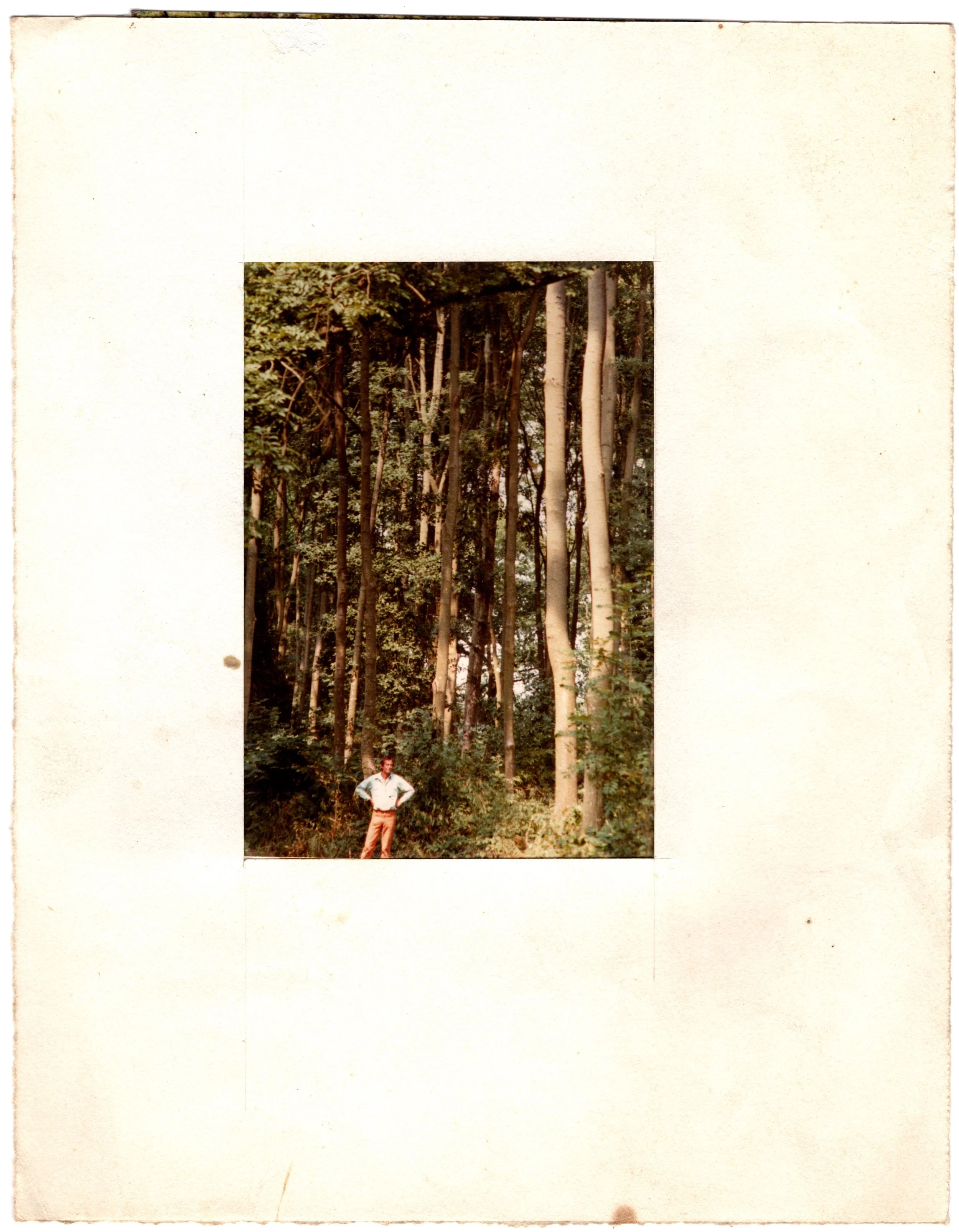
Among hardwoods, ash is exceptional. Tough, resilient and remarkably strong when fast grown, it is also self-seeding and naturally suited to sustainable forestry. Unlike many timbers, ash contains no distinct sapwood, reducing waste in conversion and making more of the tree usable.
Together with Douglas fir, ash is among the most effective trees for absorbing atmospheric carbon and grows particularly well in the UK. It is plentiful, comparatively affordable and ideally suited to steam bending.
The finest fast-grown ash often comes from younger trees, frequently woodland thinning. This benefits foresters too, providing a valuable return long before the main timber crop matures.
Ash is not simply a material of convenience. Its qualities — strength, flexibility and efficiency — naturally lend themselves to thoughtful making.
DESIGNING FOR A GREEN ECONOMY
I work by the principle: “Is right, looks right.”
It keeps my feet on the ground and often leads me somewhere imagination alone would not.
So what is right? At this moment in time, designing for a green economy feels both the most necessary and the most interesting form of rightness. Design has two essential roles here: finding practical solutions and making them desirable. Resistance to change may be one of the greatest barriers to a sustainable future.
A green solution should be holistic. It should not deliver only one positive outcome, but many. How much pleasure can it bring to the user, the maker and those involved in its production? Can its environmental impact be beneficial too?
In searching for this balance between use, making and material, an elegant core idea often emerges. Taking that idea forward means thinking carefully about how materials themselves wish to be used. Here, being both designer and maker is invaluable.
Some technologies — solar panels and batteries, for example — are still developing and may, for now, limit our options. But most things in the physical world are not at a technical frontier. They have existed for centuries and remain open to endless reinterpretation: chairs, houses, cups, tables — the objects that shape our daily lives and cultural identity.
We are not running out of chairs. But rethinking them keeps our culture alive, relevant and, one hopes, optimistic.