
CHAIRS
Chairs are unlike most other furniture because they involve direct contact with the body. In this sense they are closer to a pair of boots than to a cabinet or table.
For this reason, comfort and good posture are fundamental. A chair should have a degree of flexibility — enough to encourage movement and gently guide posture rather than impose it. I am drawn to efficient structures, and chairs provide an ideal medium for exploring this. My preference is for structures that are light yet strong, where flexibility contributes to strength rather than diminishing it. The experience of sitting in such a chair is profoundly different from that of a heavy, rigid one.Making chairs is inseparable from designing them. The process teaches how a material wishes to be used, encouraging simplicity and helping avoid unnecessary complexity or awkward construction.
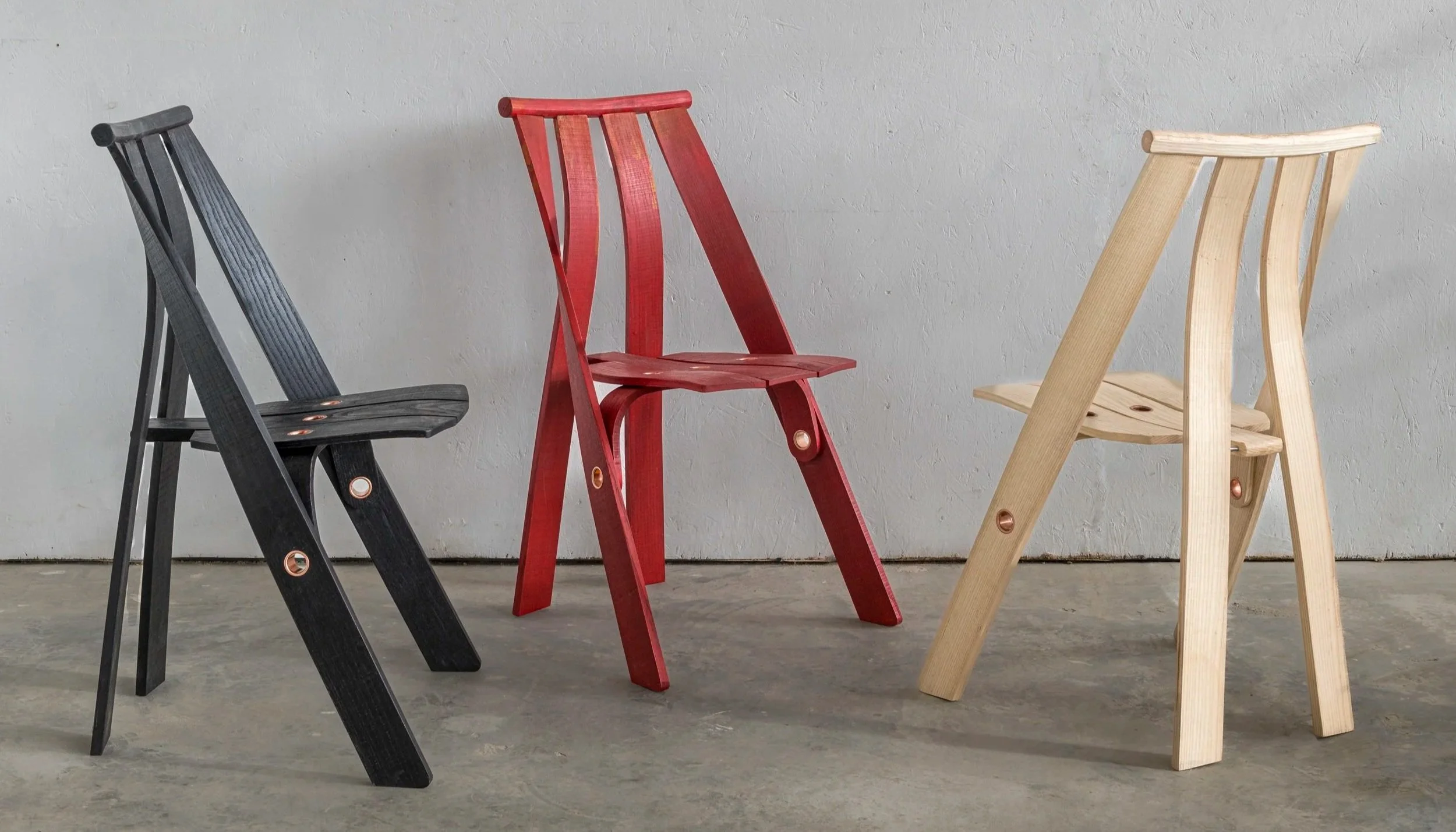
NEW - A CHAIR 3
Where strength and elegance arise from geometry
The design departs from the conventional model of a chair with four legs placed at the corners. Instead, A Chair 3 is organised around a triangulated structure, where steam-bent ash elements cross and brace one another to create strength through geometry rather than mass. Like a bicycle frame, stability comes from the relationship between the parts. The intersecting lines give the chair a quiet dynamism while maintaining a calm physical presence.

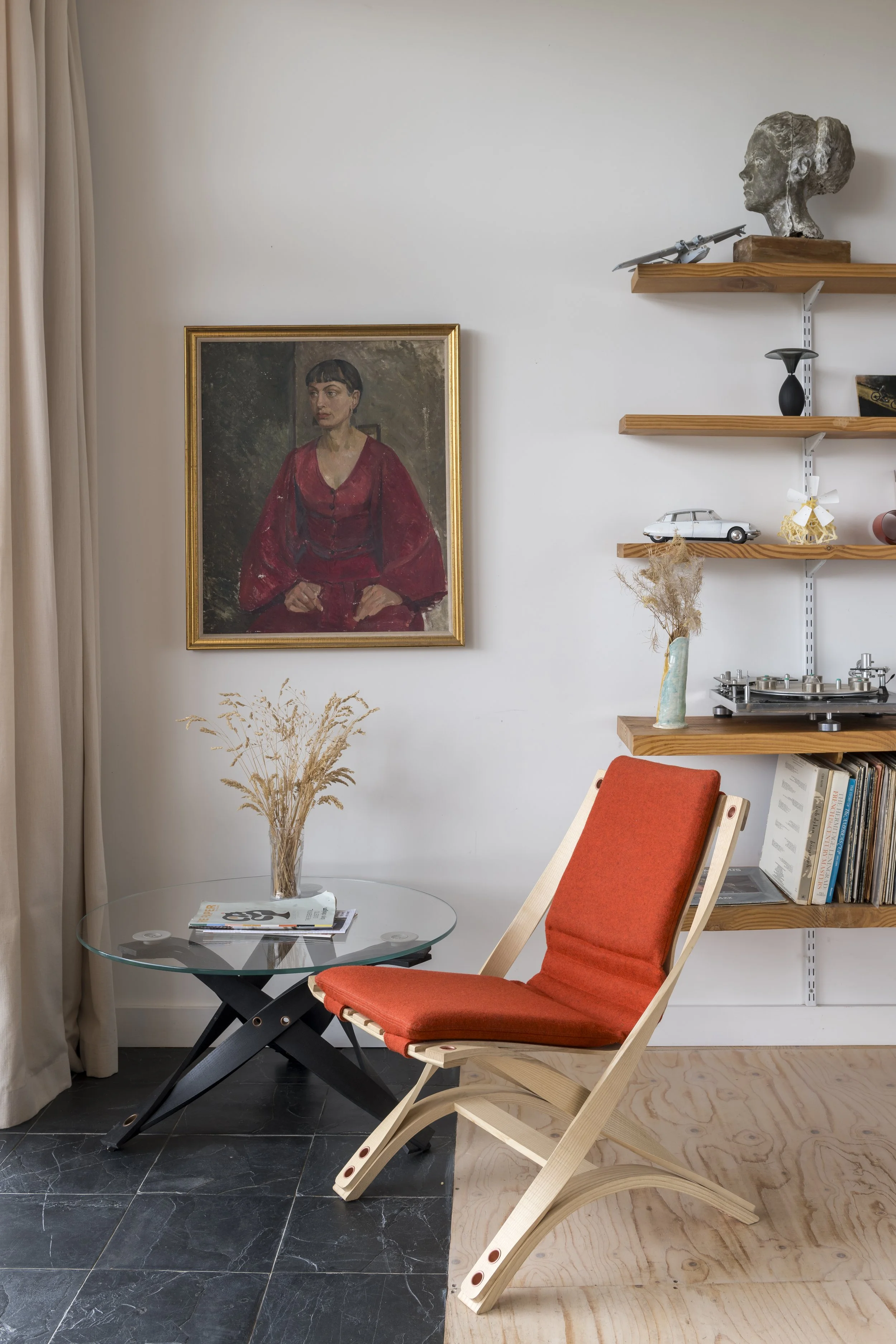
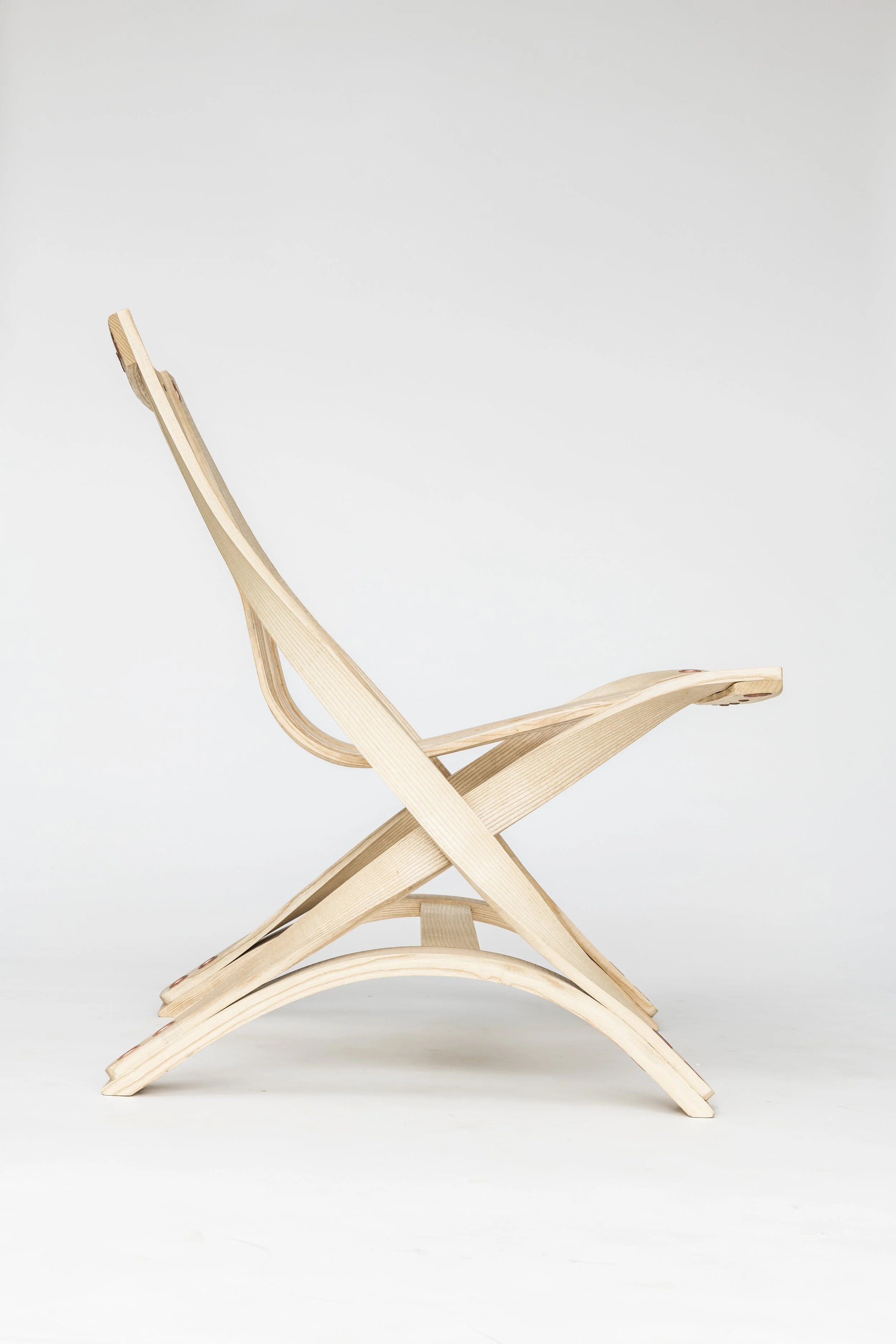
ROXi CHAIR
ROXi, it rocks, but it can’t be art, it’s far too comfortable!
What makes the ROXi Chair work so well is also what makes it look so modestly original. Where the X members cross, they twist to pass each other like dancers. Their free movement gives the chair a subtle rocking motion that is exceptionally comfortable and reminds us that we too are flexible structures.
This chair takes the steam bending of ash to another level, extending the environmental benefits of its predecessors. The design is made posable by our unique tubular rivet construction. Available with or without the latex-filled felted wool upholstered pad.
Winner of a 2025 Design Guild Mark
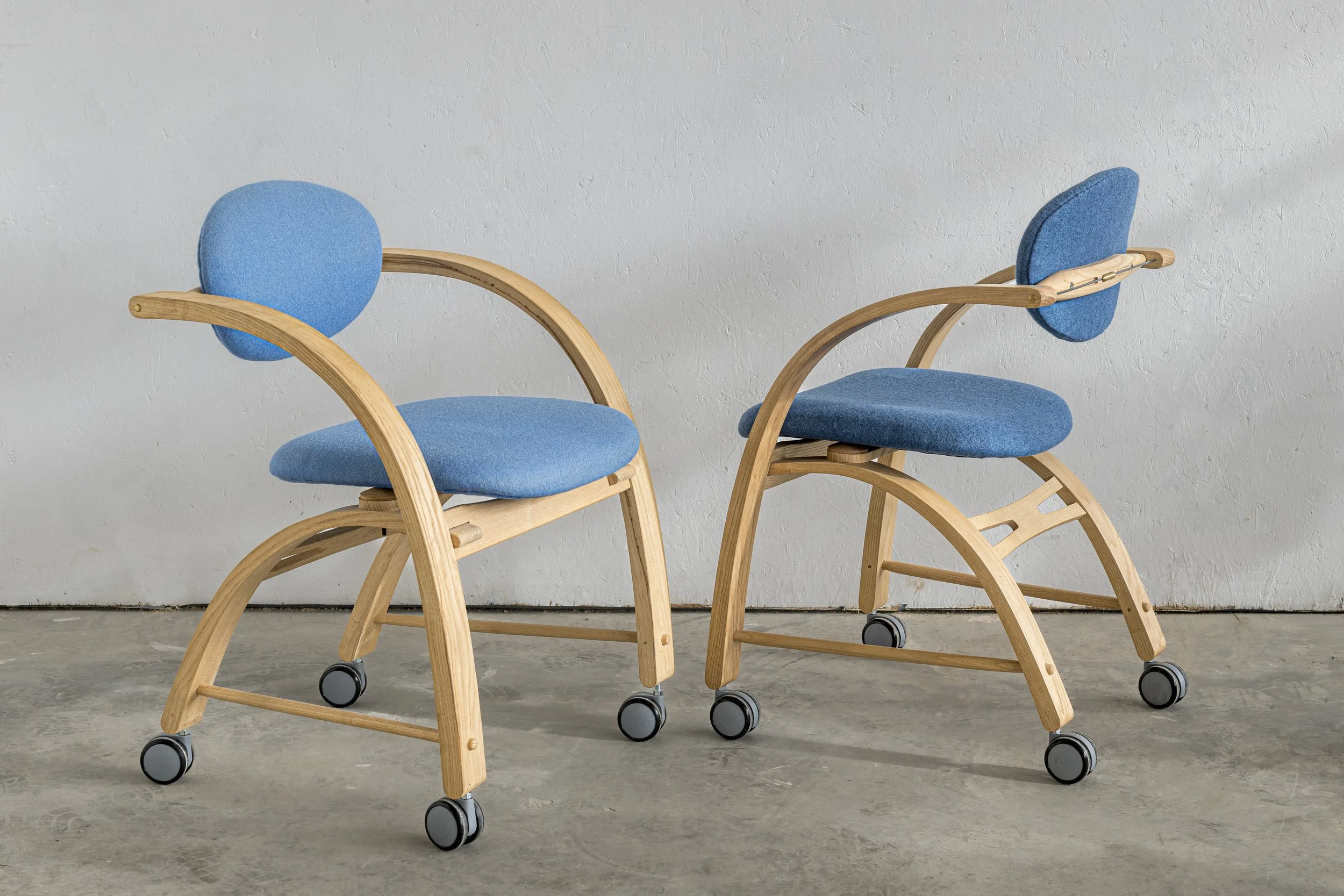
C12 HOME OFFICE CHAIR
With home working and leisure increasingly centred around screens, we now spend more time seated than ever before — often second only to our beds.
This prompted a complete redesign of an established family of chairs. The C12 introduces new moulds throughout, revised pivoting mechanisms for both seat and back, updated upholstery and fabric options, larger castors for improved mobility and a more refined overall form.
Designed to be your chair, the C12 is compact enough for domestic spaces, light in use and exceptionally comfortable, with posture central to its design.
The chair encourages active sitting. Sitting forward, with the feet comfortably beneath the seat, helps keep the back upright, while the flexible structure allows you to lean and stretch, gently supporting movement and relieving pressure across a range of sitting positions. Space beneath the chair is equally important, improving mobility and making it easier to move and rise from the seat.
ARCHIVE PIECES
Colwell’s earlier furniture designs, offering an insight into the evolution of his thinking, making and material language. These pieces reflect a lifelong commitment to simplicity, strength and sustainability, with each design shaped by an understanding of structure, comfort and the natural qualities of timber. Rather than sitting apart from his current work, the archive forms part of an ongoing story: a body of furniture rooted in experiment, craft and a deep respect for how things are made.


TRANNON RANGE
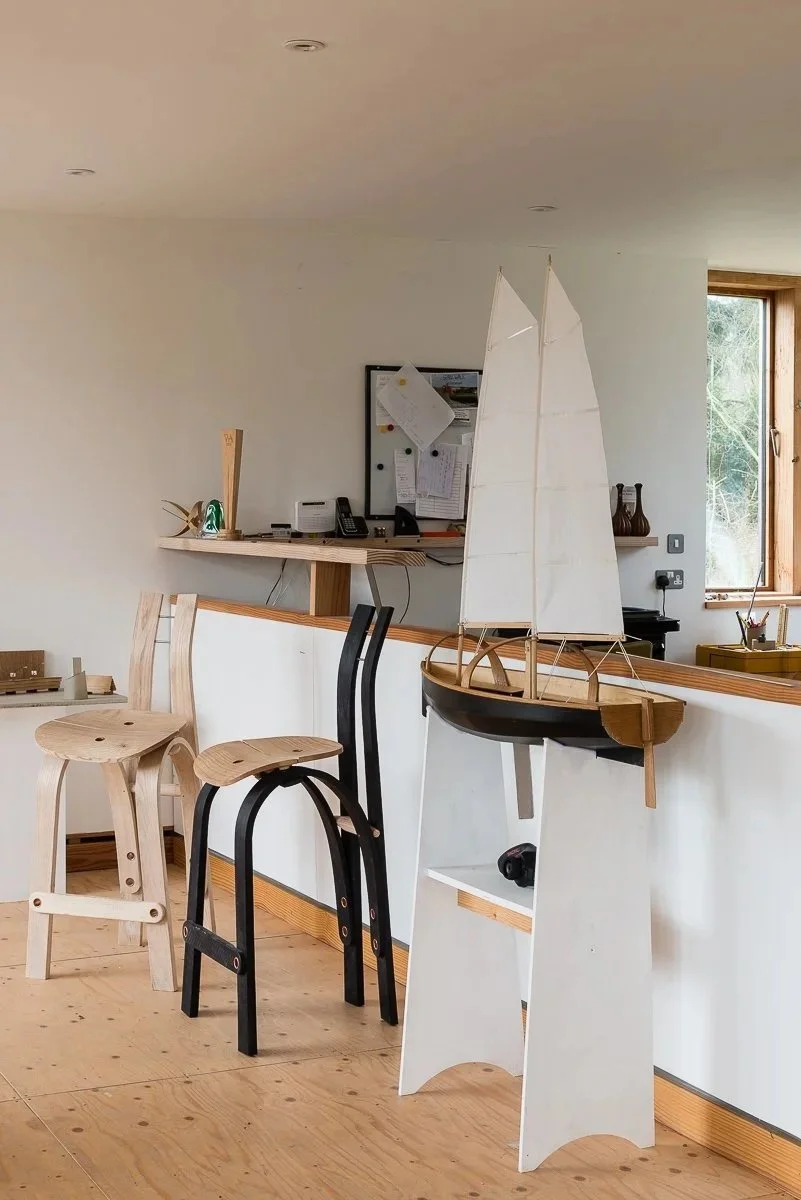
I founded Trannon in 1979 in a closed school in Mid Wales, where the workshop remained for ten years. It was during this period that the language of the Trannon range emerged — C1, C2, C3 and the TR tables — establishing many of the ideas that continue to inform my work.
Alongside the range, we undertook commissioned projects, including gallery seating for the Museum of Wales.
I worked with two former students from Hooke Park, Richard Foyle and Roy Tam. As a craft-based workshop we were remarkably successful while remaining true to our core principles. The collection evolved largely through specific commissions and practical requirements, serving not only private clients but also corporate and public-sector projects.


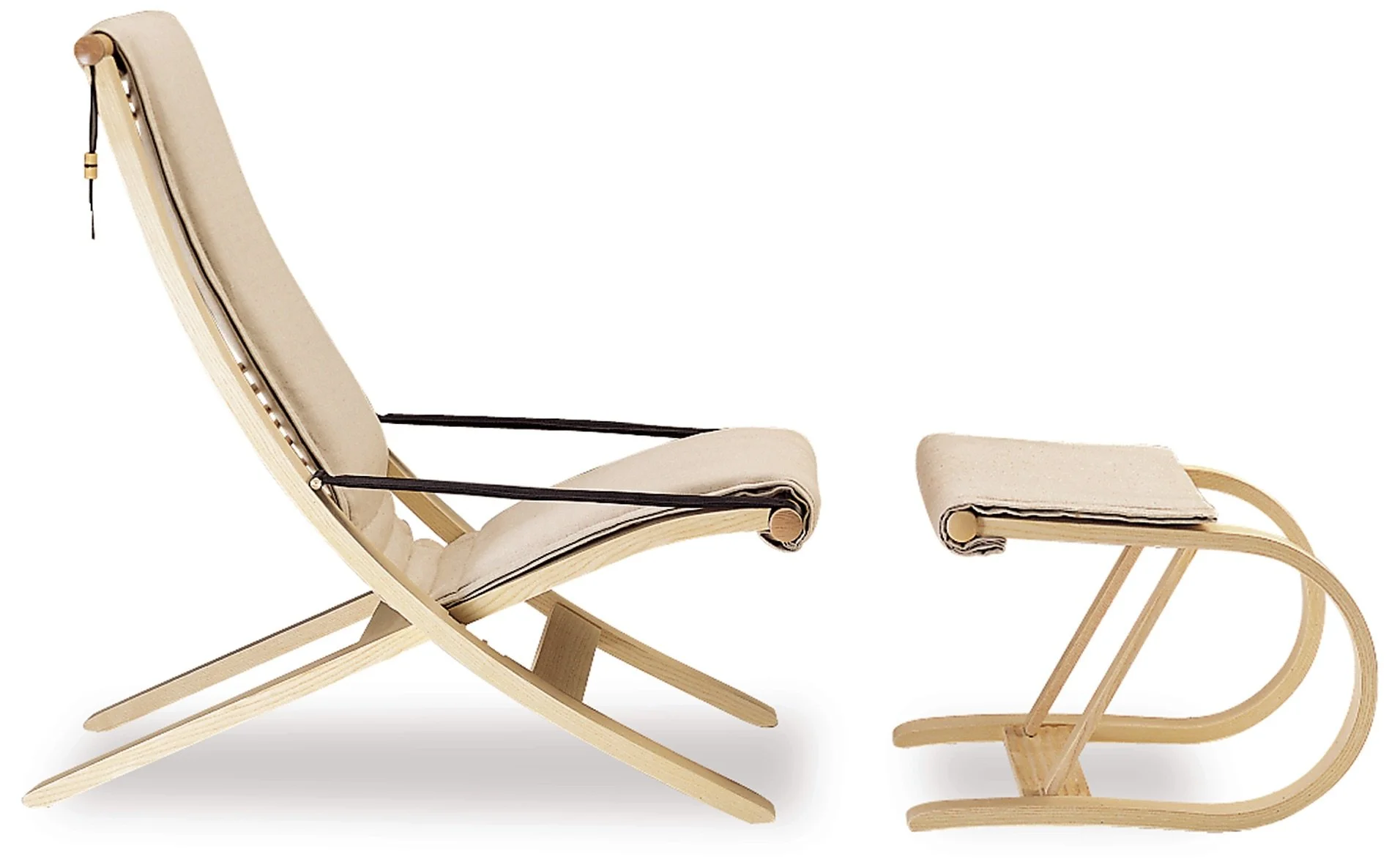

CONTOUR CHAIR
I designed the Contour Chair in my final year at the RCA, but the technique was developed the previous year for an exhibition in collaboration with ICI plastics division.
It won me the RCA silver medal and shortly afterwards was selected for a V&A Modern Chairs exhibition at the Whitechapel Gallery in 1970. Two of them were bought for the V&A’s permanent collection.

TABLES
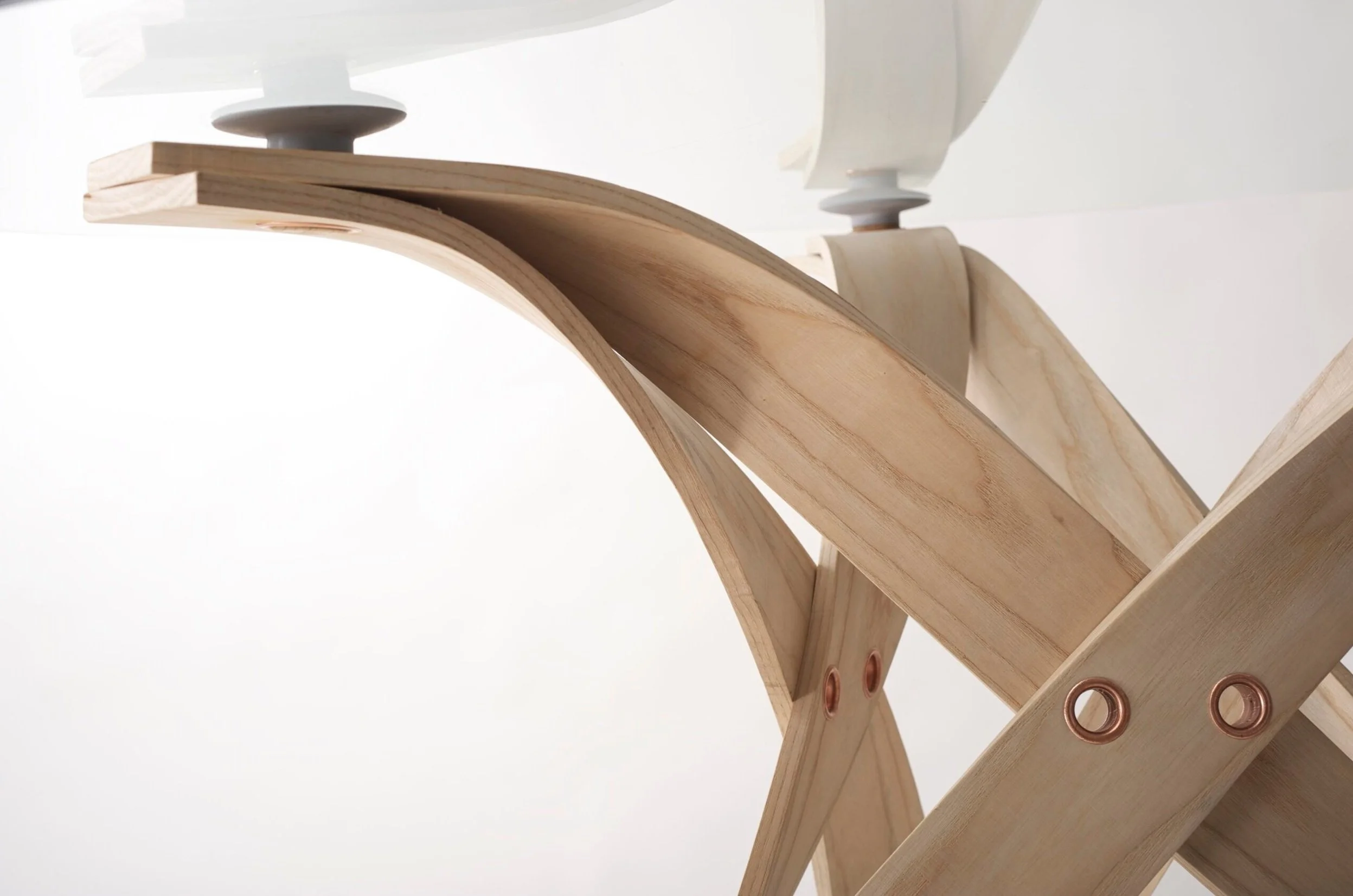
Tables should have legs that don’t get in the way and should be rock solid. Solid hardwood table tops give pleasure over generations. Glass tops show off our dramatic structures and occupy very little visual space.
This is a small sample of table designs, if you have specific requirements we can meet them. Please get in touch to discuss.



Get in touch
Please get in contact with any enquiries about furniture or commissions via email david@davidcolwell.com or complete the form.
For any press enquiries please contact rachael@davidcolwell.com